
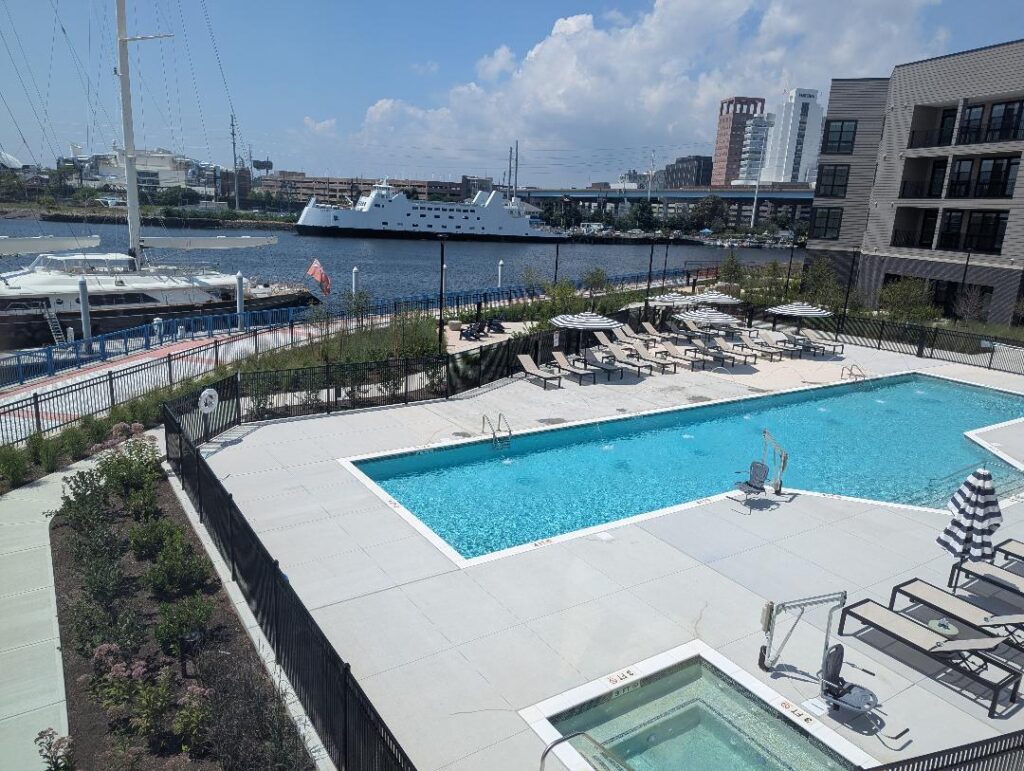
I was born in Bridgeport, lived here, left here, returned here and I couldn’t be happier where I now reside, The August at Steelpointe Harbor, a pearly coastal community loaded with amenities that saves you money from conventional rental status.
People shrugging cynically at a surface, rental price point do themselves illogic disservice by not examining the larger quality-of-life picture.
Located at the nexus of East Side, East End and Downtown, the 420-unit August amenities include:
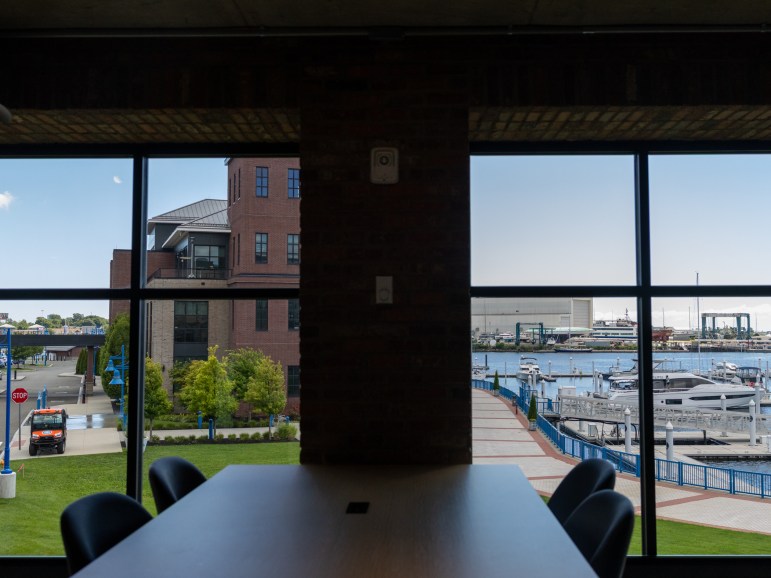
In-unit washer/dryer, GE appliances, gated, secure parking, fitness center, swimming pool, sauna, first-floor Frenchies Coffee Bar, waterfront-view work spaces, outdoor grill stations with tables and chairs for guests, pizza ovens, excellent highway, train and ferry access. It’s also pet friendly.
Do you have those comforts and conveniences where you live or seeking a livable rent? No. Not like this.
Under the Build For Connecticut Program, subsidized by the state, let’s say you’re a couple earning a combined $100,000 per year. You can rent a one-bedroom, temperature-controlled 900-square foot modern apartment will all of those amenities included for $2,500, all in. That’s just $1,250 each per month. Some of those rooms include spacy dens.
Studio apartments start at $1,900. Also, no first and last month rent upfront that is generally required in rental agreements. A $400 deposit is required that can be spread out monthly over the term of the lease. The August currently has a special, two months free on lease terms of 10 months or longer.
You don’t have to worry about digging out your car in the winter, or running from your vehicle in a raging rain storm, carrying groceries in one arm, your child in another.
What about the electric bill? The only other bill I pay is UI. It’s averaged $50 per month for three months I’ve resided here.
Living at The August is like residing at a luxury hotel at a fraction of the cost. There’s no place like this along the Fairfield County Gold Coast. Boca Oyster Bar is on the premises where a Marriott Hotel rises. Bass Pro across the street.
Bridgeport native Reginald David who writes for OIB media partner CT Mirror asked me for a tour the other day as part of a broader community story. The folks who make assumptions about The August have not visited.
Want a tour? Contact me. Happy to sport you around. I’ll throw in a cup of coffee from Frenchies.
You won’t be disappointed.
Steelpointe Harbor, the waterfront development at the southern tip of Bridgeport’s East Side, has been touted for decades as a centerpiece of the city’s revival. Concepts proposed for the site over the years — including former plans for a luxury movie theater, hotel and a Dave & Buster’s restaurant — served as symbols of what Bridgeport hoped to become.
Now, some retail, a restaurant and, most recently, the first phase of housing is here, with more still to come.
Last month, residents began moving into The August, a 420-unit apartment complex across from Bass Pro Shops, Chipotle and Starbucks and next to the waterfront Boca Oyster Bar.
The apartment complex is the first residential phase of a larger transformation of Steelpointe, a peninsula that was once home to a United Illuminating power plant.
The August offers its residents a pool, fitness center, sauna, workspaces, parking and harbor views. Rents range from around $1,900 for some of the nearly 40% deed-and income restricted apartments to more than $9,000 a month for some of the market-rate three-bedroom units, an annual rent that totals nearly double the city’s median income.
For city residents, The August is more than a new apartment building. It is a sign of how Bridgeport is changing and who can afford to be part of that change.
The question is not whether Bridgeport needs development. Nearly everyone who spoke to The Connecticut Mirror said it does.
The question is who gets to participate in it.
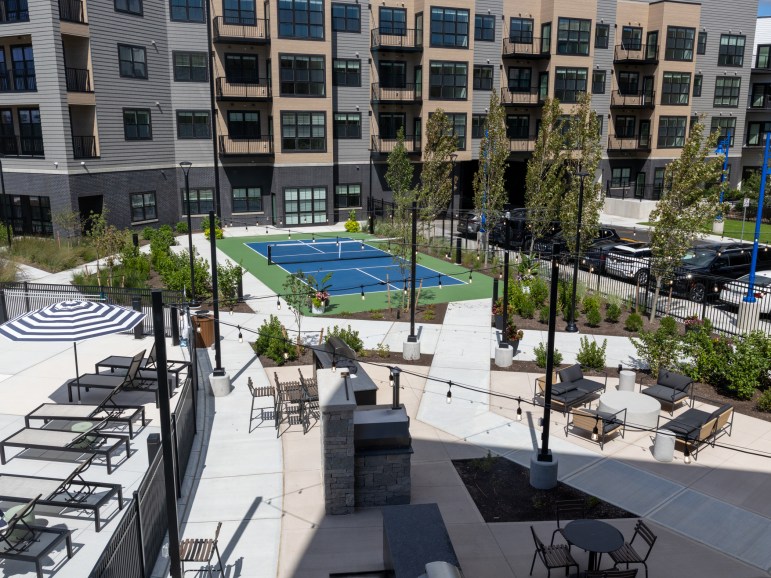
Mayor Joe Ganim says The August is part of a broader effort to increase Bridgeport’s housing supply. The city is pursuing a goal of 5,000 new units across the city by the end of the decade, he said, with more than 1,300 currently in active development. About 30% of those units are deed-restricted affordable housing, according to the mayor.
“Both market-rate and affordable housing production are necessary,” Ganim said in a written statement.
But “affordable” means something different to residents depending on where they stand.
The development is cut off from the East Side neighborhood it belongs to by Interstate-95. The median household income for that neighborhood was $45,754 in 2024, according to data from the U.S. Census Bureau.
The August has some apartments set aside for people with middle incomes. To qualify, a person’s income must fall within a certain range based on the size of their household. For example, a person living alone can earn between about $88,000 and $110,000 a year and qualify for some of these apartments. A household of five can earn as much as about $203,000 and still qualify for some units. Renters also must earn at least 2.5 times the apartment’s monthly rent to qualify.
Those numbers are based on regional income standards, while Bridgeport’s median household income was $57,394 in 2024, according to census data. That disconnect concerns Wayne Winston, who was a longtime city resident, activist and Bridgeport NAACP member and now lives in Trumbull.
“Affordable is basically what a person can afford,” Winston said.
Winston said he wants Bridgeport to attract investment, businesses and good-paying jobs. But he questions the value of expensive housing if the people living around it do not have the incomes to afford it.
He calls the jobs Bridgeport needs “feed your family jobs.”
“If we can’t benefit, it makes it very difficult to just say, ‘Hey, this was a good idea,’” Winston said.
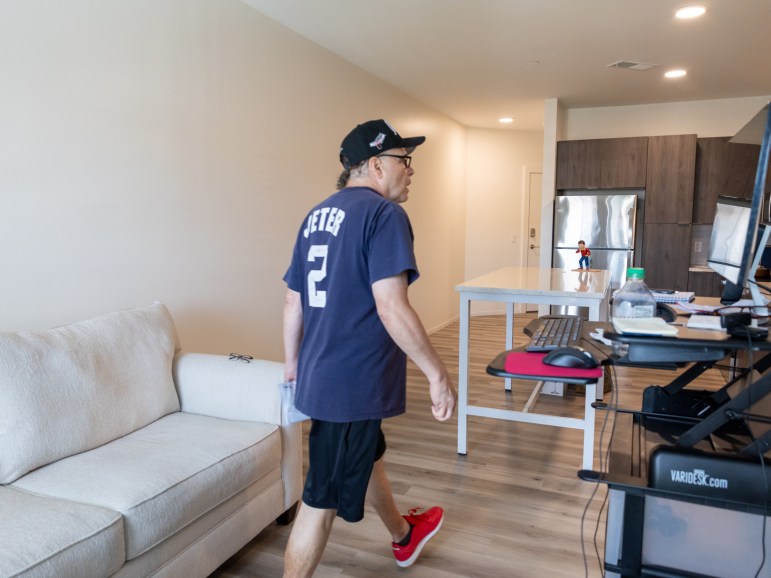
Lennie Grimaldi sees the development differently. The longtime Bridgeport political insider and founder of the Only In Bridgeport blog now lives at The August. Grimaldi, who worked for Ganim during the mayor’s first time running the city more than two decades ago, describes The August as a transformational project. He said its affordability should be considered alongside its amenities and the range of apartments available.
He points to the building’s amenities as well as the income-restricted units.
Grimaldi acknowledges that some of the building’s highest-priced units are out of reach for many renters. But he said the conversation has focused too heavily on the most expensive apartments rather than the entire building.
“You really need a mix of housing,” Grimaldi said.
That mix is where Kelvin Ayala, a Bridgeport resident and business owner, sees both an opportunity and a problem.
Ayala, director of economic development at Led By Us & Associates, considers himself pro-development and pro-developer. He said Bridgeport needs housing at different income levels, including market-rate apartments like those at The August.
But Ayala said many residents cannot see how they move from the housing they have now into the new housing being built around them.
“We don’t see the tiers,” he said.
For Ayala, the issue is whether Bridgeport is creating a path for residents to improve their economic circumstances and eventually participate in the growth happening around them. He also said the city needs to improve its older housing stock so residents are not forced to choose between deteriorating apartments and expensive new construction.
“It’s OK to know you can’t afford it yet,” Ayala said. “But it doesn’t mean you can’t set your goals and want it.”
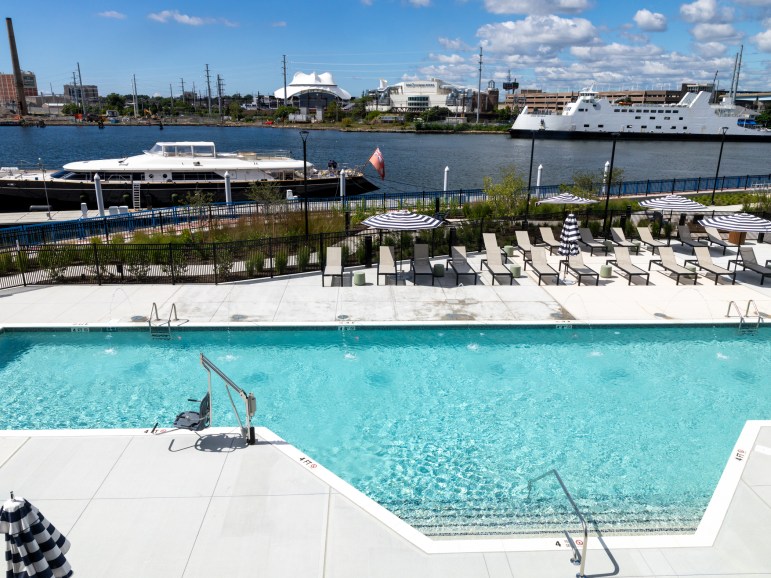
Alicia Carpenter-Cummings, a longtime North End resident who has worked throughout Bridgeport, including in her work with the American Red Cross, has seen firsthand the needs residents face. She questions whether adding housing without adding the stores, services and jobs people need actually creates stronger neighborhoods.
“You’re putting up more housing, but you’re not putting up grocery stores,” she said. “You’re not putting up drugstores.”
She points to the East End, the neighborhood just over the Yellow Mill Channel bridge on Stratford Avenue, where residents have waited years for a grocery store to be built. Many have also argued the neighborhood lacks many services within its borders, like a bank or pharmacy.
Carpenter-Cummings’ concern is that people can move into new apartments without ever becoming economically connected to the neighborhood around them.
Residents, she said, have opportunities to speak about development. What matters is whether anyone listens.
“I think residents always have an opportunity to speak,” Carpenter-Cummings said. “But the next question is: Is what they say going to get a response?”


Councilman Jorge Cruz, who represents the city’s South End, said Steelpointe is contributing to gentrification and worries that rising housing costs will make it harder for longtime residents to remain in Bridgeport.
But Cruz also said the city needs development. His concern is based on how he defines affordable housing: not by an income formula but by what is left after the rent is paid — enough to cover bills, buy food, save money and live without the constant fear of eviction.
“Affordable housing means where somebody feels content, feels that they’re established,” Cruz said.
Mercedes Alicea, an East Side resident, sees the issue through the condition of the neighborhoods surrounding the new development. She wants investment in infrastructure, small businesses and services in the communities where many Black and Latino residents have lived for generations.
For Alicea, it is difficult to celebrate expensive new apartments while longtime residents continue asking for better streets, neighborhood services and economic investment.
Her frustration reflects something that many others repeated to the CT Mirror: residents do not necessarily want Bridgeport to stop changing. They want to know whether they will be part of the change.
Ganim argues that the city is working toward that balance by producing housing across the income spectrum, from deeply affordable and supportive housing to workforce, mixed-income and market-rate apartments.
But while the city counts units under construction, residents count their paychecks, rent, groceries, transportation and what is left at the end of the month, they said.
That is why The August has become such a powerful symbol in Bridgeport.
Residents said they want Bridgeport to grow. They just don’t want to be left behind by that growth.
Longtime Bridgeport resident and former city librarian John Soltis grew up two blocks from Father Panik Village, a former East Side public housing complex that reported high levels of crime and poverty before its demolition began in the late 1980s.
Soltis has watched Steelpointe plans come and go for decades. He sees the opening of The August as progress. But he is skeptical that enough of the housing will reach the residents who need it most.
“I would have liked to see some more genuinely affordable housing there,” Soltis said.
He said successful development should bring people of different incomes, races and backgrounds into the same communities rather than separate them.
“We need a mix of people,” Soltis said. “But we don’t need gentrification.”
This article first appeared on CT Mirror and is republished here under a Creative Commons Attribution-NoDerivatives 4.0 International License.

Lennie, did he say “Pet Friendly”? A few days ago, you invited me to come over and tour. I forgot to ask you this very question.
We can start this from the begging. I was one of the City Councilman of district 131. I was one of the members of the original Steel Pointe Developer Selection Committe, from the RFQ, RFP, to the selection of Developer Alex Conroy, a good man who wouldn’t negotiate based on $1.00 per square footage. My schedule is pretty much open, I just have to clear with my wife.
This project would have not been made possible, had it not been for Developer Alex Conroy. It was Alex Conroy who shared with us “The only way a project like the one he proposed would be economically feasible”.
Here it is: Tax Incriment Financing (TIF), was Alex Conroy’s.
. Steel Point Infrastructure Improvement DistrictThis is a special tax increment financing (TIF) district created to fund the major coastal redevelopment project (where Bass Pro Shops and the harbor marina are located). [1] (https://cga.ct.gov/ofa/Documents/year/SBC/2014SBC-20130910_Analysis%20of%20the%20Bass%20Pro%20Shops%20Tax%20Incremental%20Financing%20Proposal.pdf), [2] (https://www.facebook.com/wboy12news/posts/tif-district-bridgeport-city-council-reviewed-ongoing-tif-lawsuits-during-a-spec/1392452689583916/)The Boundaries: This district is located on the peninsula just east of downtown, primarily bordered by Stratford Avenue, Seaview Avenue, and the waterfront. [1] (https://www.cga.ct.gov/2010/TOB/S/2010SB-00501-R00-SB.htm)Where to View the Map: Parcel boundaries and real-time mapping for this zone can be found on the City of Bridgeport GIS Hub under their economic development and interactive planning maps. [1] (https://www.bridgeportct.gov/government/departments/planning-economic-development/geographic-information-system-gis)
I didn’t know of his passing. Rest in peace.
Alexius Conroy Obituary (1945 – 2019) – Southport, CT – Connecticut Post https://share.google/J4vmZHNTFAAtBZO5X